
America’s regulations and safety system for school buses could be looking at major changes, as U.S. Representative Bruce Braley (D-IA) has announced he intends to introduce “the most comprehensive overhaul of the nation’s school bus safety system in over 15 years.” According to Braley, the bill he has titled the School Bus Safety Act is focused on addressing illegal passing incidents, students struck by their own school buses, driver training, lap/shoulder seat belts, as well as federal grant programs to assist school districts.
Braley announced the legislation on his Facebook page Thursday, where he posted: “For many schoolchildren, their safety is more at risk coming and going from school than the classroom or on the playground. That’s why today I introduced the School Bus Safety Act.”
School Transportation News reports the legislation has yet to be filed, as it has to be officially introduced on the House floor, however a spokesman for Braley’s office said this won’t occur until Congress is back in session later this month, at the earliest.
Some form of Braley’s bill is likely to pass, though it will presumably undergo considerable revisions before it is accepted by Congress. Braley’s current form of the School Bus Safety Act is aggressive. It includes five major provisions, including another attempt at passing a federal law requiring states to enforce school bus passing laws and to match the penalties set by Iowa for such violations.
To support this enforcement, Braley’s act would also direct the National Highway Traffic Safety Administration to asses using technology to get drivers to stop for school buses. One way to do this Braley suggested is to study how a particular lighting system might prevent motorists from illegally passing stopped buses.
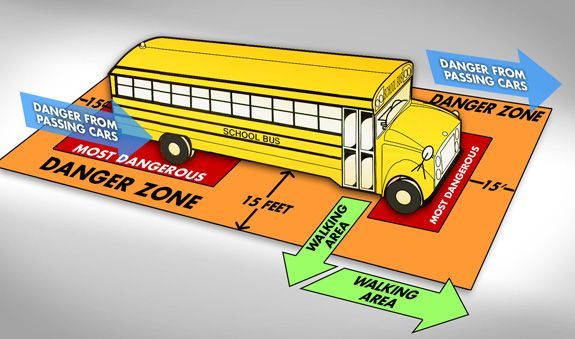
Another provision of the bill focuses on the reduction of student deaths from being struck by their own school bus. Under the law, the Department of Transportation would be allowed to provide state grants to equip buses with motion-activated detection systems that utilize radio or radar waves to alert drivers to the presence of a pedestrian anywhere near the “danger zone” of a bus before pulling away from a stop. States would also be required to submit a report to the Department of Transportation that would provide data on the effectiveness of the motion detectors.
