
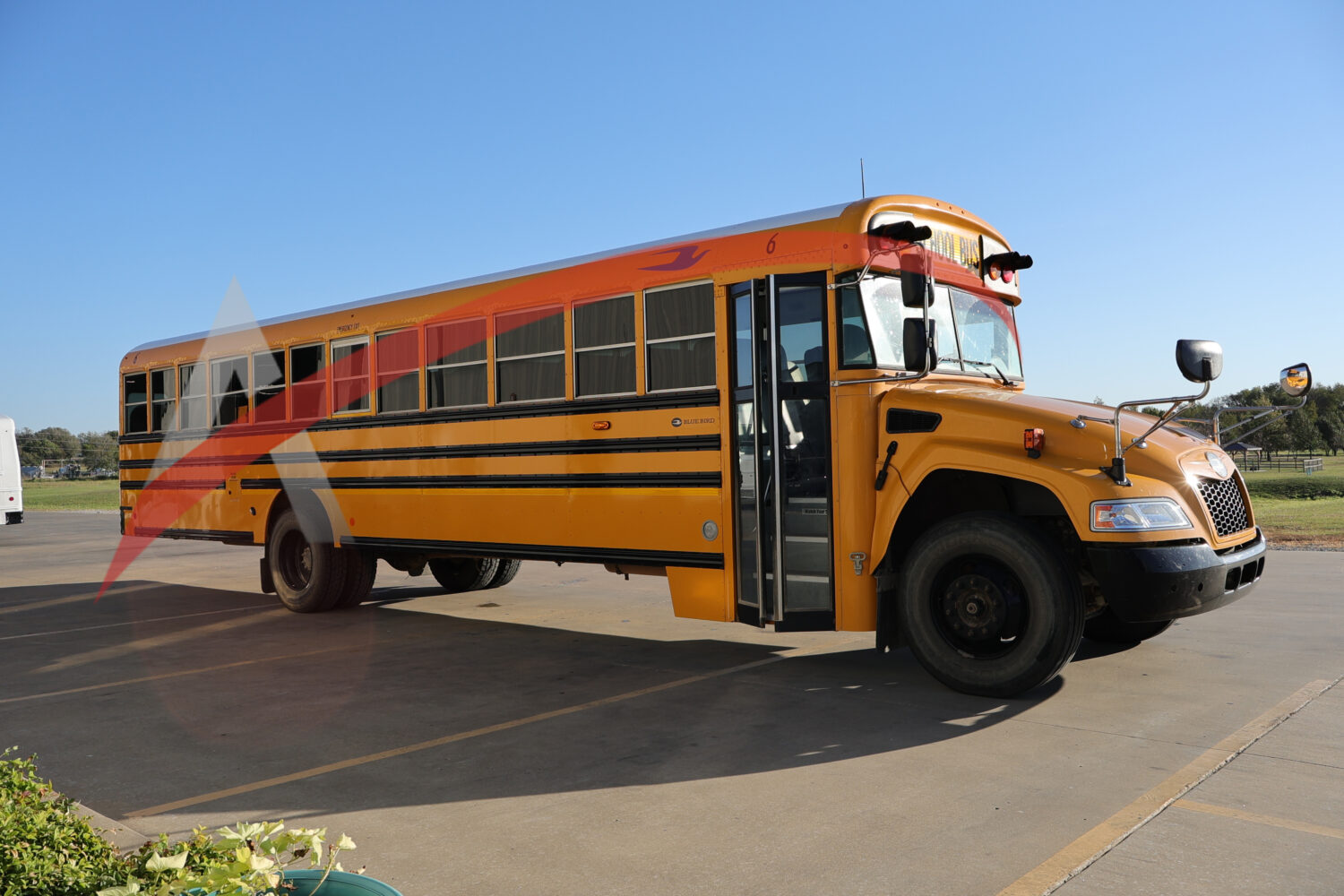
If you ask most people what matters when buying a bus, they’ll usually say the same things: price, mileage, engine, passenger count.
Almost nobody says suspension.
We get it. Suspension sounds technical. It feels like something mechanics worry about, not buyers. After years of selling buses to schools, churches, companies, and fleet operators all over the country, we’ve seen the same thing over and over again.
Suspension is one of those things you don’t think about, until it’s bad. And when it’s bad, everything about the bus feels worse.
You Feel Suspension Before You Understand It
You don’t need to know how suspension works to notice it.
Think about the difference between a ride that feels steady and one that feels like it’s constantly fighting the road. The bus that glides over bumps versus the one that rattles your teeth. The bus that feels solid on the highway versus the one that sways every time a truck passes.
That’s suspension.
Two buses can look almost identical on paper and in photos. Same size, similar engine, similar price. But once you drive them, the difference can be night and day.
We’ve had customers step out of a test drive and say something like, “I didn’t realize a bus could feel this smooth.” That reaction almost always comes down to the suspension system.
It’s Not Just About Comfort
Comfort is part of it, sure. However, suspension affects more than people think.
When a bus rides rough, it puts stress on everything else. Tires wear faster. Parts loosen. Maintenance adds up. Drivers get tired faster. Passengers complain more.
On the other hand, when the suspension is doing its job, the whole bus just feels easier. It is easier to drive, to maintain, and for passengers to ride in.
It’s one of those things that quietly affects the cost of owning a bus, even if it doesn’t show up clearly on the invoice.
The “Cheap Bus” Problem
We see this a lot.
Someone finds a bus that looks like a great deal. The price is lower than expected. On the surface, everything looks fine. But the suspension is tired, outdated, or not built for the kind of use the bus is going to see.
Six months later, they’re calling about repairs, tire issues, or handling problems. The bus wasn’t actually cheap; it was just cheap upfront.
A worn or low-quality suspension system can turn into a constant drain on time and money. And it’s not always obvious at first glance. That’s why we always encourage buyers to look deeper than mileage and paint.
Drivers Notice It First
Passengers feel suspension, but drivers live with it.
A bus with poor suspension takes more effort to control. It might wander on the road, bounce more than it should, or feel unstable in turns. Over a long day, that wears on a driver.
We’ve talked to fleet managers who noticed something interesting: when they upgraded buses with better suspension, drivers complained less. Not about pay, not about routes, about the buses themselves.
That says a lot. When drivers feel comfortable and confident in a vehicle, everything else runs smoother.
Why Some Buses Just Feel Better
People sometimes assume that a “better” bus means nicer seats or newer technology. Those things matter, but they’re not the whole story.
A big part of what makes a bus feel high-quality happens underneath it.
Air ride suspension, for example, changes how a bus behaves on the road. Instead of every bump traveling straight through the frame, the bus absorbs it. Instead of feeling stiff under a full load, it adjusts.
You don’t need to know the technical details to appreciate the difference. You just feel it. That’s why some buses feel surprisingly smooth even if they’re not brand new, while others feel rough even if they look good on the outside.
Suspension and the Life of the Bus
Here’s something a lot of buyers don’t realize: suspension doesn’t just affect the ride. It affects how long the bus lasts.
Constant vibration and impact take a toll. Over time, it can affect the frame, the drivetrain, and even interior components. Doors, panels, seats, and electrical systems all feel the effects of a bus that’s constantly being shaken by the road.
When suspension is solid, the bus ages better. It stays tighter, quieter, and more reliable.
In the long run, that can make a big difference in how much value you get out of a bus.
What This Means If You’re Buying a Bus
If you’re in the market for a bus, suspension probably isn’t at the top of your checklist. That’s normal.
But it should be part of the conversation.
Ask how the bus rides. Ask about the suspension system. Pay attention to how it feels during a test drive. If something feels off, it probably is.
At American Bus Sales, we spend a lot of time looking at the parts people don’t always think about. We know that a bus isn’t just about specs, it’s about how it performs in real life, on real roads, with real people on board.
We sell buses nationwide, and whether someone is buying one bus or an entire fleet, the goal is the same: find something that won’t just look good on paper but hold up over time.
The Bottom Line
Suspension systems aren’t exciting. They’re not what most buyers brag about, but they’re one of the biggest reasons a bus feels reliable, or frustrating.
If you’ve ever wondered why one bus feels solid and another feels shaky, even when they seem similar, suspension is probably the answer. If you’re looking at buses right now and aren’t sure what to look for, we’re happy to talk it through with you. At American Bus Sales, we help customers across the country find buses that make sense for how they’ll be used, not just what looks good on paper.
Whether you’re comparing options, thinking about upgrading a fleet, or just want an honest opinion on a bus you’re considering, reach out to our team. We’ll help you find something that rides well, holds up overtime, and fits your budget.
Contact American Bus Sales today at 866.574.9970 to learn more about our buses for sale.
Contact Us
Hours: Mon-Fri 7:30AM-4:30PM
Website: https://americanbussales.net/
Phone: 866-574-9970
Address: 12802 North 103rd E Ave, Collinsville, OK 74012
